
Highlights from the First EUPATI Spotlight Training
On 18 November 2026, EUPATI delivered the first edition of EUPATI Spotlight, the newest training in the EUPATI Learning Lab. The interactive three-hour online session brought together representatives of industry and academia to explore the EU Health Technology Assessment Regulation (HTAR) and Patient Experience Data (PED), and to exchange experiences with others working in the field.
The training was led by Carolyn Ingram, EUPATI trainer and Health Technology Assessor at the National Centre for Pharmacoeconomics in Ireland. It was structured in three parts, each focusing on a key aspect of the topic.
Part 1: Why patient experience data matter
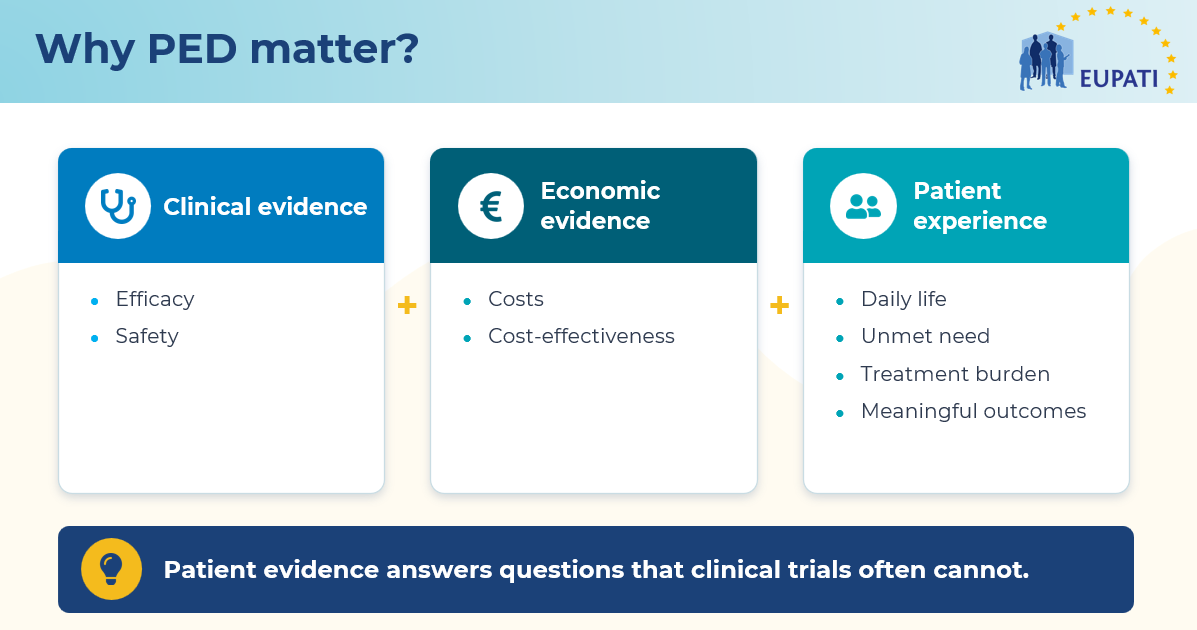
PED capture what clinical trials often cannot show: the impact of a condition on daily life, unmet needs, treatment burden and the outcomes that matter most to patients. The session covered three main types of PED:
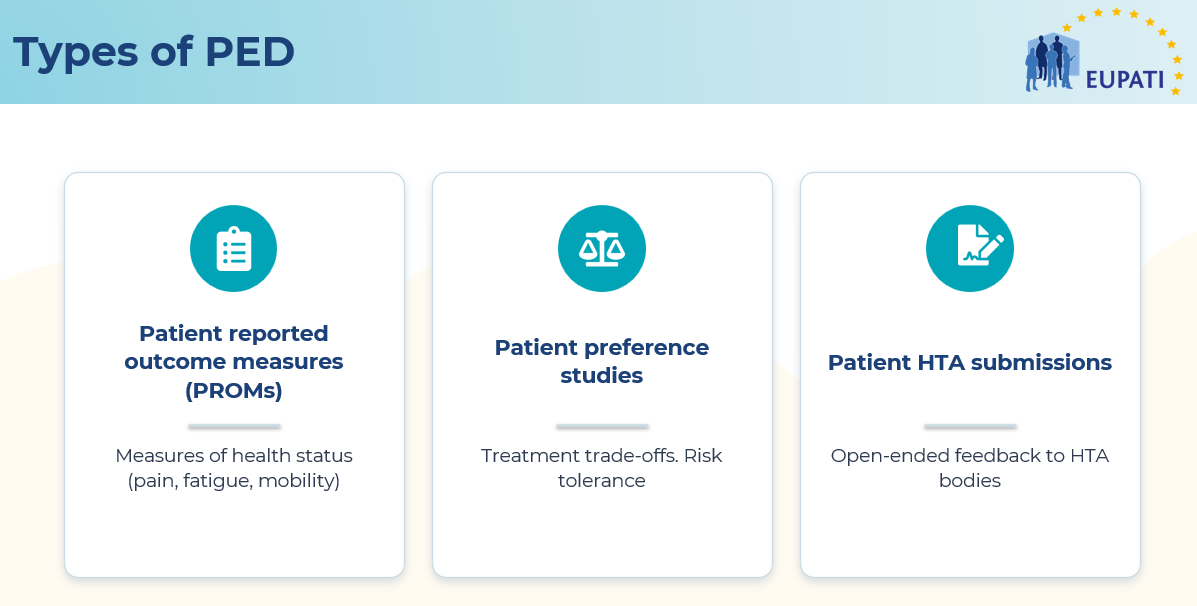
- Patient-reported outcome measures (PROMs), such as the EQ-5D-5L, which can be converted into utility values for cost-effectiveness analysis.
- Patient preference studies, which show how patients weigh benefits against risks.
- Patient organisation submissions, which give HTA bodies direct insight into what it means to live with a condition.
A key message was the value of early collaboration between patient organisations, companies and researchers, so that meaningful outcomes are agreed from the start.
Part 2: The HTA Regulation and the patient voice
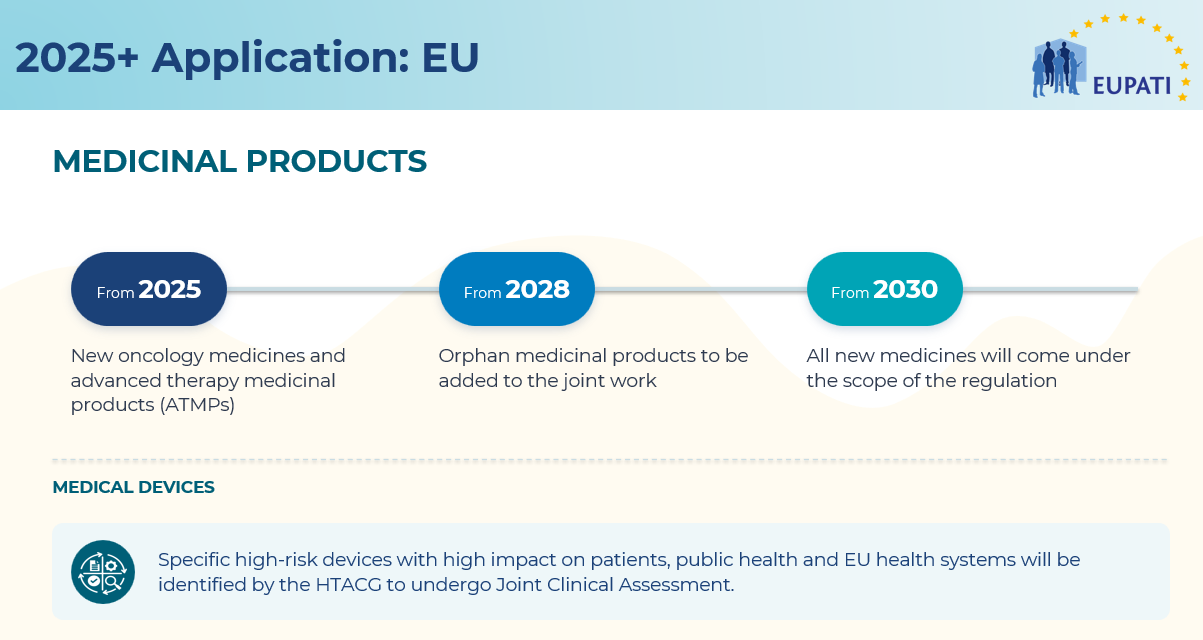
Applied since January 2025, the HTAR introduces EU-wide Joint Clinical Assessments (JCA) alongside national HTA. Its scope covers new oncology medicines and advanced therapies from 2025, orphan medicines from 2028, and all new medicines from 2030. Patients, carers and clinicians contribute as individual experts across Horizon Scanning, Joint Scientific Consultations and JCA.
Part 3: PICOs in a Joint Clinical Assessment
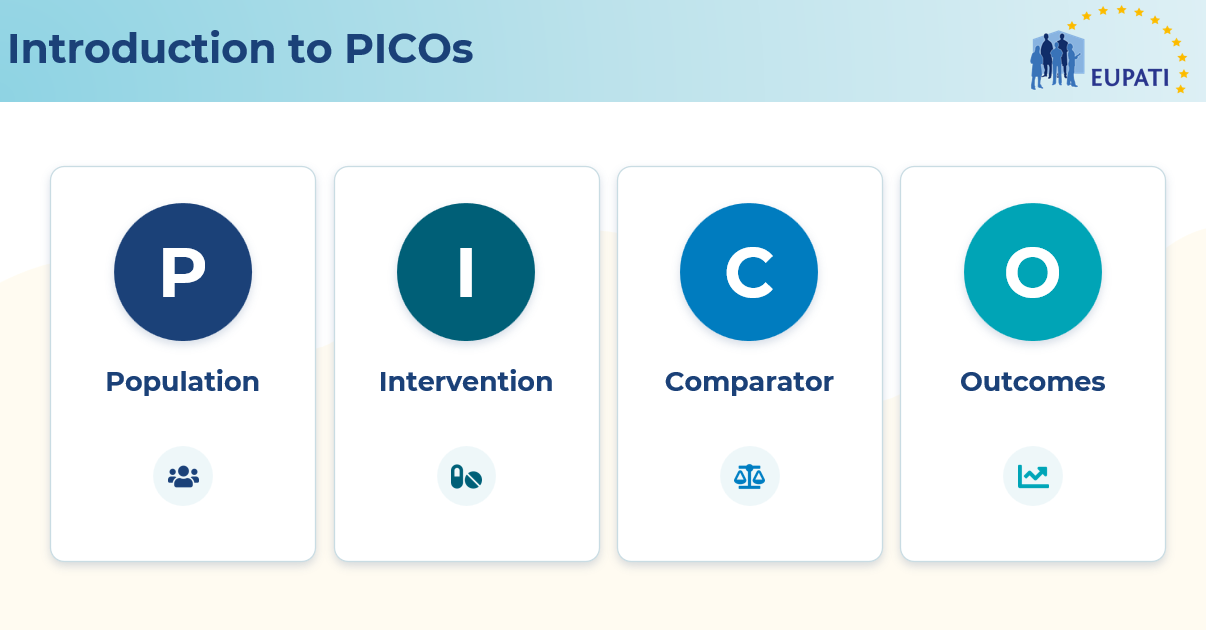
The final part used a recently published JCA to show how the PICO framework (Population, Intervention, Comparator, Outcomes) defines the scope of an assessment, and where patient and carer input fits in.
The value of discussion
The discussions were a highlight of the training. Participants debated which outcomes matter most to decision-makers and which matter most to patients, and why patient input has the greatest impact when it shapes trial design. For industry and academic representatives, these conversations offered a chance to compare perspectives and reflect on how to generate evidence that meets the needs of both HTA bodies and patients.
Looking ahead
As the scope of the HTAR widens, dialogue between industry, academia and patients on PED will only grow in importance. EUPATI will continue to create spaces for this exchange.
We warmly thank Carolyn Ingram for leading the training, and all participants for their active and thoughtful contributions.
Interested in EUPATI Spotlight for your team or organisation? Visit the EUPATI Spotlight page or contact us.
Date posted: November 24, 2026
Categories: EUPATI News, Training