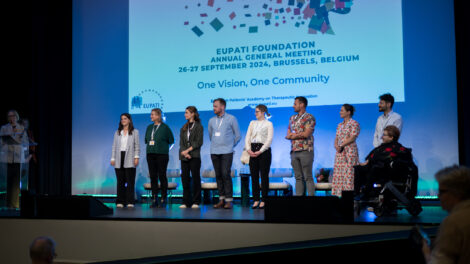
On 2–3 December 2025, EUPATI hosted the Consolidation and Sustainability Alignment Workshop in Brussels, marking the final strategic milestone of the HTA4Patients project.
With the HTA4Patients project nearing its conclusion and the EU HTA Regulation now one year into implementation, the workshop provided a timely opportunity to reflect on progress, lessons learned, and the long-term sustainability of patient involvement across Europe.
The event brought together representatives from the European Commission, national HTA bodies, patient organisations, HTA Ambassadors, EUPATI National Platforms, and other key stakeholders to assess where we stand and where we go next.
Setting the Scene: Why Patient Involvement Matters
The workshop opened with a keynote by Anke-Peggy Holtorf, highlighting that patient involvement in HTA is not merely procedural – it is fundamental to democratic, transparent, and value-based health systems.
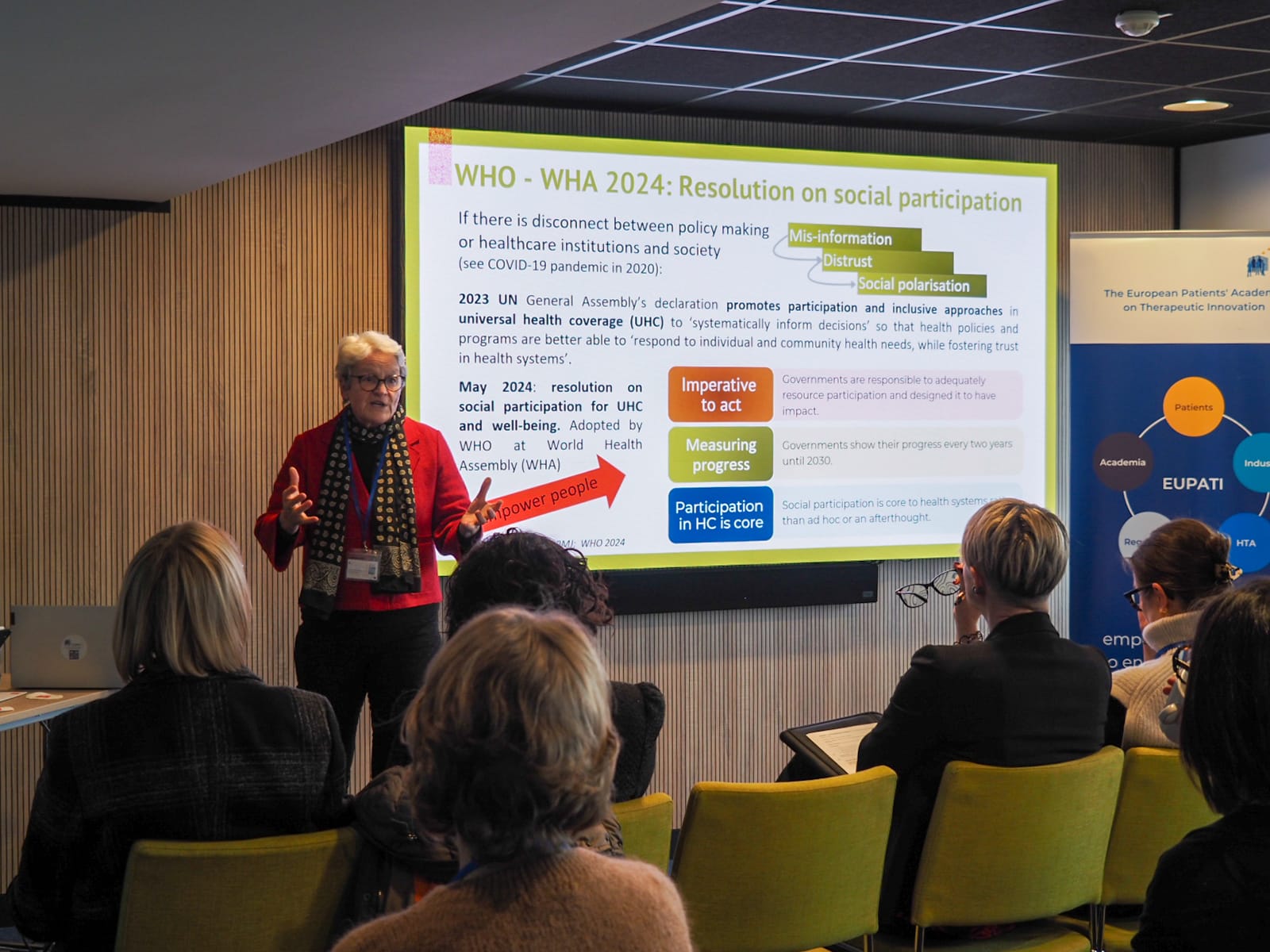
Figure 1: Excerpt from Anke-Peggy Holtorf’s presentation
Key Messages
1. Patient involvement in HTA is a global imperative
Drawing on international developments and multi-organisational collaboration (INAHTA, HTAi, EUnetHTA, WHO and others), the presentation emphasised that patient involvement is not an “add-on”, but an emerging norm in modern health systems.
2. HTA as a multidisciplinary, value-based process
Patient perspectives were framed as essential to understanding:
- Intended and unintended consequences of technologies
- Lived experience and contextual knowledge
- Social and ethical dimensions of value
3. Education as the foundation of meaningful participation
Education was identified as the foundation of meaningful participation: ”Training must empower patients not only to understand HTA processes, but to engage critically and contribute confidently to decision-making.”
Reflecting on the HTA4Patients Journey
The EUPATI Secretariat presented key achievements of the project, including:
1. Establishment of a Coordination and Governance Structure, including a clearly defined project management structure, with designated roles and responsibilities for coordination, reporting, monitoring, and decision-making between the EUPATI Secretariat, Project Management Group (PMG), Project Expert Panel (PEP), and EUPATI National Platforms
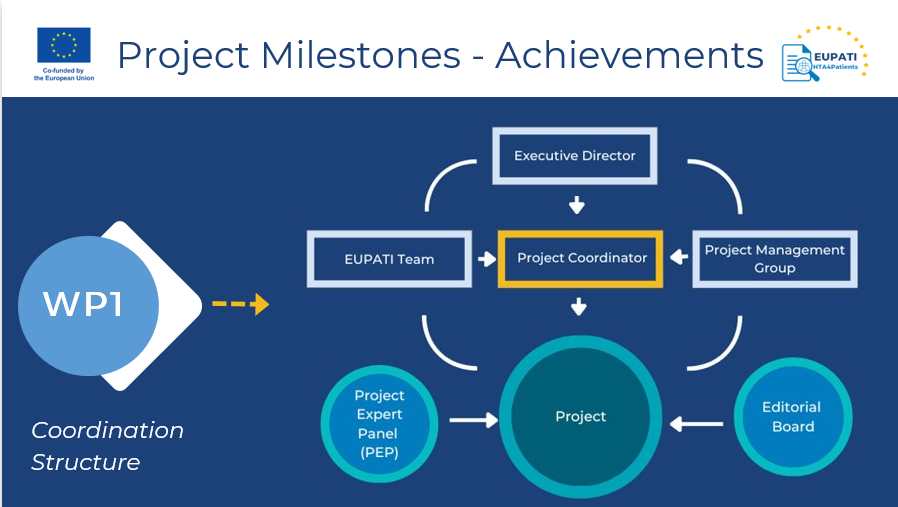
Figure 2: Overview of HTA4Patients Project Coordination Structure
2. Development of Structured Training Infrastructure, including the enhancement of the HTA module within EUPATI Open Classroom to support improved learning experience and accessibility, the development of the EU HTAR Course within the EUPATI Open Classroom (available in 9 languages), the creation of a Mini-Course Starter Kit within the EUPATI Toolbox (also available in 9 languages), and the delivery of 13 training session on the EU HTAR in 6 languages.
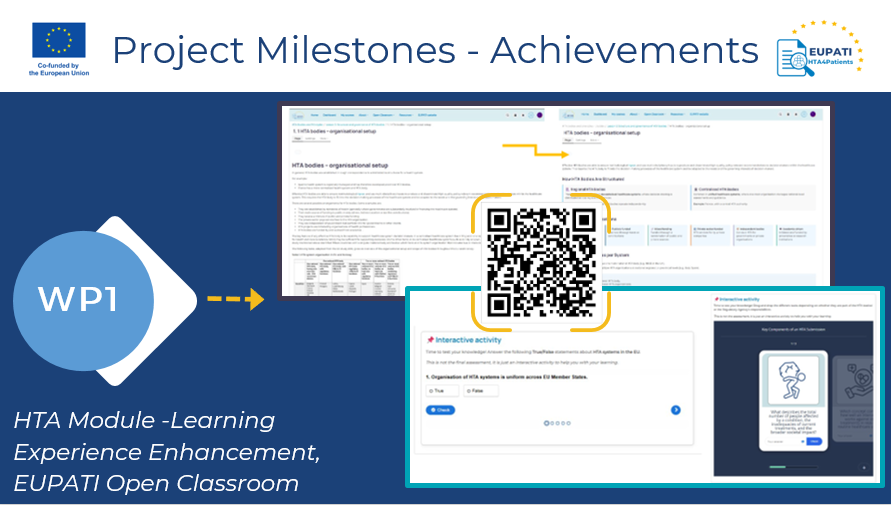
Figure 3: Overview of WP1 achievements
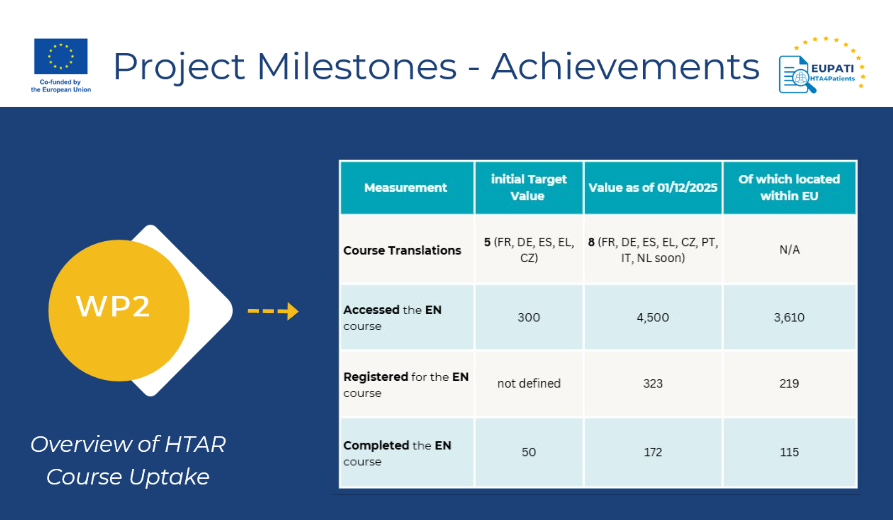
Figure 4: Overview of WP2 achievements
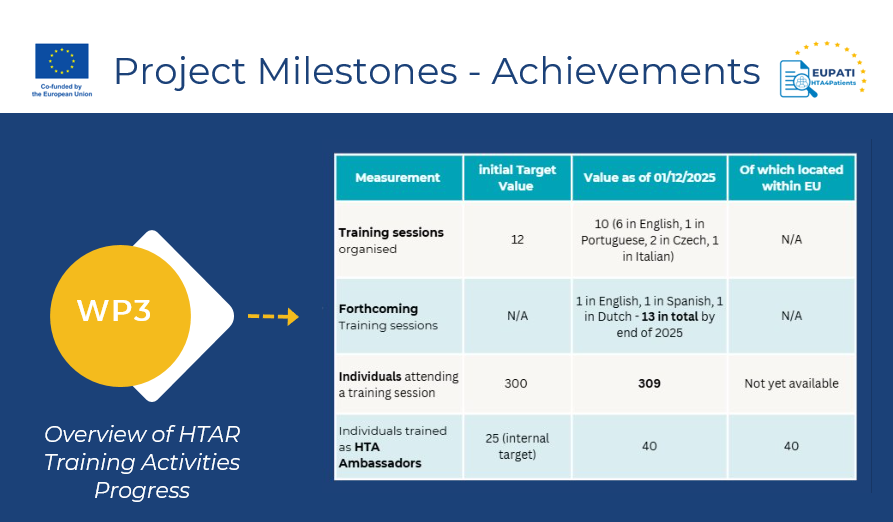
Figure 5: Overview of WP3 achievements
3. Activation of the HTA Ambassador Network
The HTA Ambassador network is already demonstrating early scalability and sustainability, as HTA Ambassadors actively collaborated with EUPATI by proofreading HTA training materials (notably in French) and contributed as speakers in national-language training sessions, including the Italian, Spanish, and Dutch sessions.
Stakeholder Panel: Where Do We Stand?
The session brought together a strategic group of co-panelists: Valentina Strammiello (EPF), Marcus Guardian (BCCH), Julie Spony (EC), Petra Adamková (ENP Czech Republic), and Maggie Galbraith (HAS), moderated by Julia Chamova (ISPOR). A multi-stakeholder panel discussion examined the first year of implementation of the EU HTA Regulation.
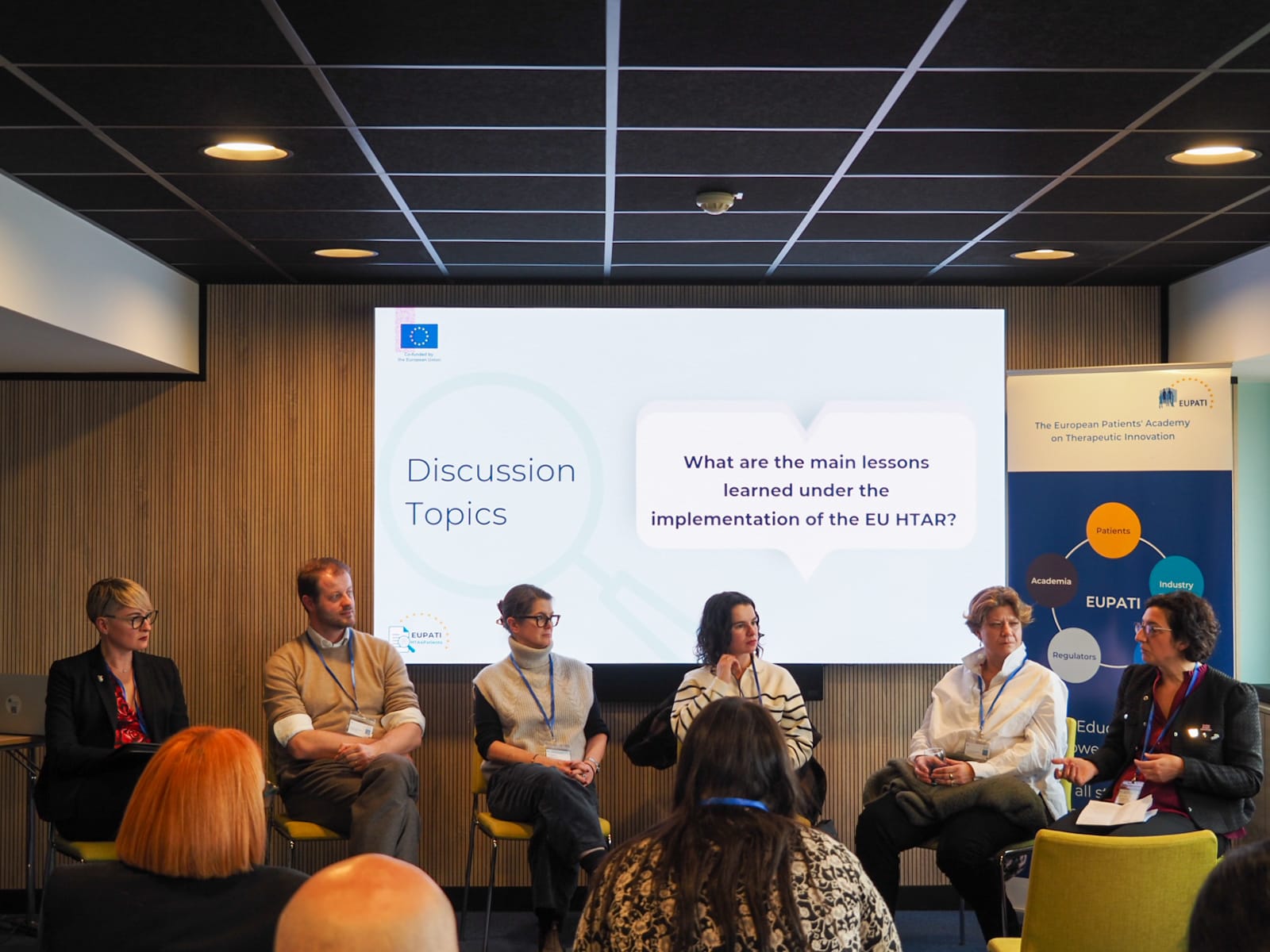 Figure 6: Excerpt from the Stakeholder Panel Discussion Session
Key Outcomes
1. Patient involvement is now embedded in EU HTA, but meaningful implementation is still evolving
Awareness of patient engagement in HTA has significantly increased at EU level, expanding beyond a small group of advocates to a broader pool of informed patient organisations.
2. Awareness and capacity-building remain urgent priorities
Considering that many patient organisations are still unaware of the HTA Regulation and opportunities to participate in Joint Clinical Assessments (JCA) and Joint Scientific Consultations (JSC), there is a clear need for:
- Targeted training
- Simplified communication materials
- Ongoing capacity-building initiatives
3. Practical participation barriers persist
Considering the administrative complexity (e.g., declarations of interest), IT access and usability issues (e.g., EU login system), the lack of clarity around expectations of patient contributors and language and accessibility barriers in documentation, certain mitigation actions were discussed such as:
- The creation of a dedicated IT support function
- The development of guidance on conflict of interest declarations
- The establishment of patient-facing informational platforms
- The exploration of more visual and user-friendly communication tools
4. Strong national practices can accelerate EU-level participation
Experience from countries with established patient involvement (e.g. France) demonstrated that:
- National patient engagement structures significantly facilitate participation at EU level.
- Dedicated patient involvement units and pre-identified patient pools enable rapid mobilisation during tight HTA timelines.
- Early patient input into national PICOs is critical for contextual relevance.
5. EU HTA is already influencing national systems
Despite any disparities in experience, infrastructure and readiness for patient involvement, the panelists noted that EU-level patient involvement is already:
- Creating positive pressure on Member States to strengthen national practices
- Inspiring the creation of national stakeholder networks (e.g. emerging examples in Italy and Central and Eastern Europe)
- Acting as a catalyst for institutionalising engagement where none previously existed
6. Lack of methodological harmonisation is a key systemic risk
While flexibility at national level is valuable, stakeholders highlighted the risks of fragmented approaches to patient involvement, uneven quality of patient input across countries and the inequitable representation. The panelists focused on the imperative of a greater alignment or shared learning across Member States to avoid inconsistency in outcomes and ensure fairness in patient voice across jurisdictions.
7. Sustainability requires structural and not individual commitment
Emphasis was given on the fact that current progress relies heavily on individual champions and voluntary contributions from patient organisations. Long-term sustainability will require:
- Institutionalisation of patient involvement
- Dedicated funding streams
- Continued training pipelines
- Organisational and not purely individual engagement
The upcoming 2028 evaluation of the EU HTA Regulation was identified as a key opportunity to strengthen sustainability mechanisms.
8. Patient participation must be supported and not burdened
Stakeholders noted that individual patient experts often feel pressure to represent entire patient populations rather than their lived experience. Future models should better balance individual experiential input and organisational or community-level perspectives to ensure participation remains meaningful without becoming overwhelming.
9. Cross-country collaboration is essential for future readiness
To build motivation, share best practices and reduce duplication of effort, the stakeholders participating agreed that especially for smaller or less experienced Member States, sustainability will heavily depend on:
- Regional cooperation
- Shared patient pools
- European disease-network collaboration
- Peer learning across national platforms
Overall, the discussion confirmed that while progress is tangible, meaningful implementation is still evolving.
Ambassadors’ Perspectives: Bridging EU and National Systems
HTA Ambassadors shared country-level experiences from established, developing, and emerging HTA systems. The discussion featured HTA Ambassadors:
- Sergey Dmitriev (Greece)
- Ingrid Krücken (Luxembourg), and the session was moderated by:
- Diana Hoekstra (HTA Ambassador, Netherlands)
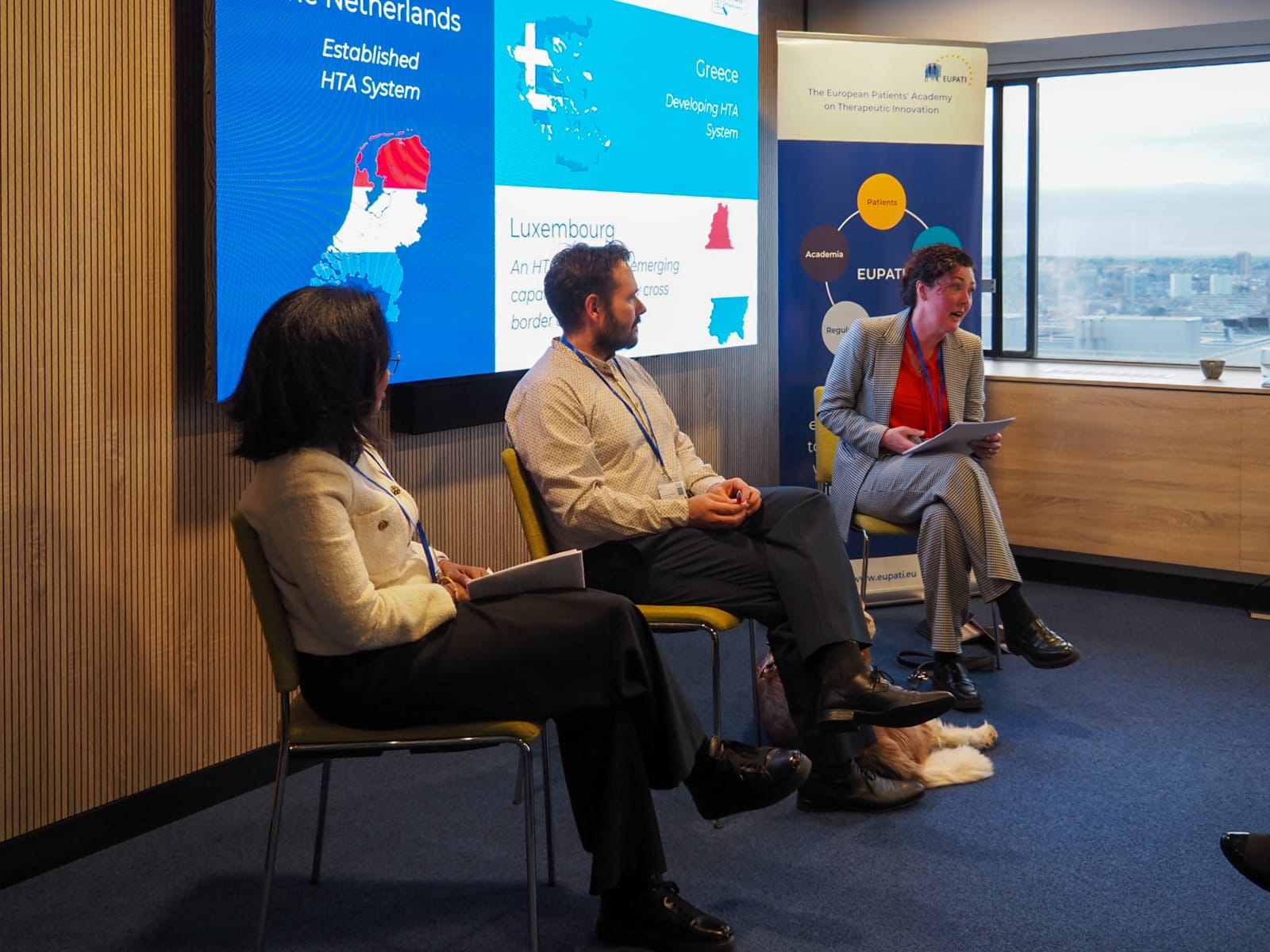
Figure 7: Excerpt from the Ambassadors’ Discussion Session
Key Outcomes
1. National HTA readiness varies significantly across Member States
Their reflections highlighted:
- Countries with structured patient involvement and defined HTA processes are better positioned to engage with EU-level activities.
- In developing systems, patient involvement often depends on individual initiative rather than institutional frameworks.
- Emerging systems benefit strongly from cross-border collaboration and EU-level learning.
2. Strong institutional foundations accelerate meaningful engagement
Ambassadors underlined that successful patient involvement depends on:
- Clearly defined HTA processes
- Structured patient engagement mechanisms
- Integration of clinical and patient-relevant evidence
- Institutionalised consultation pathways
3. Developing systems face structural and motivational challenges
Ambassador(s) from countries with developing HTA frameworks noted:
- Limited formal channels for patient participation
- Unclear mandates for engagement
- Resource constraints
- Lack of systematic feedback to patients after participation
4. The HTA Ambassador role has strategic bridging value
The session confirmed that the Ambassador model provides:
- A communication bridge between EU institutions and national patient communities
- A translation function (technical HTA language → patient-friendly understanding)
- A motivational catalyst within national networks
5. Education remains the foundational driver of empowerment
Ambassadors emphasised that:
- Awareness-building is necessary to activate and engage future patient contributors
- Training must be continuous, practical, and adaptable
- Different learning levels are required (introductory, intermediate, expert)
6. Sustainability depends on organisational embedding
Ambassadors stressed that for long-term impact, sustainability requires:
- Formal recognition of the Ambassador role
- Clear governance and ownership structures
- Regular engagement forums
- Defined interaction with national HTA bodies
- Stable resourcing models
7. Cross-country collaboration enhances resilience
Ambassadors also emphasised that cross-country dialogue would reduce duplication and accelerate readiness, especially in contexts where national HTA structures are still consolidating.
8. From ideas to action: Moving beyond reflection
The session concluded with a forward-looking call to action: ‘‘From Ideas to Action.’’
Key priorities identified by ambassadors:
- Strengthen the Ambassador network with structured annual engagement
- Develop adapted national training pathways
- Explore creative and diversified funding models
- Increase EUPATI visibility within HTAi and national ENPs
- Build alliances (e.g. EPF, EFPIA, clinicians, stakeholder network members)
Overall, the Ambassador model was recognised as a scalable capacity-building tool, but one that requires long-term embedding and resourcing.
Future Directions: From Ideas to Action
Day two of the workshop focused on building a sustainability roadmap through breakout discussions on:
- Ownership & Governance
- Partnerships and Impact
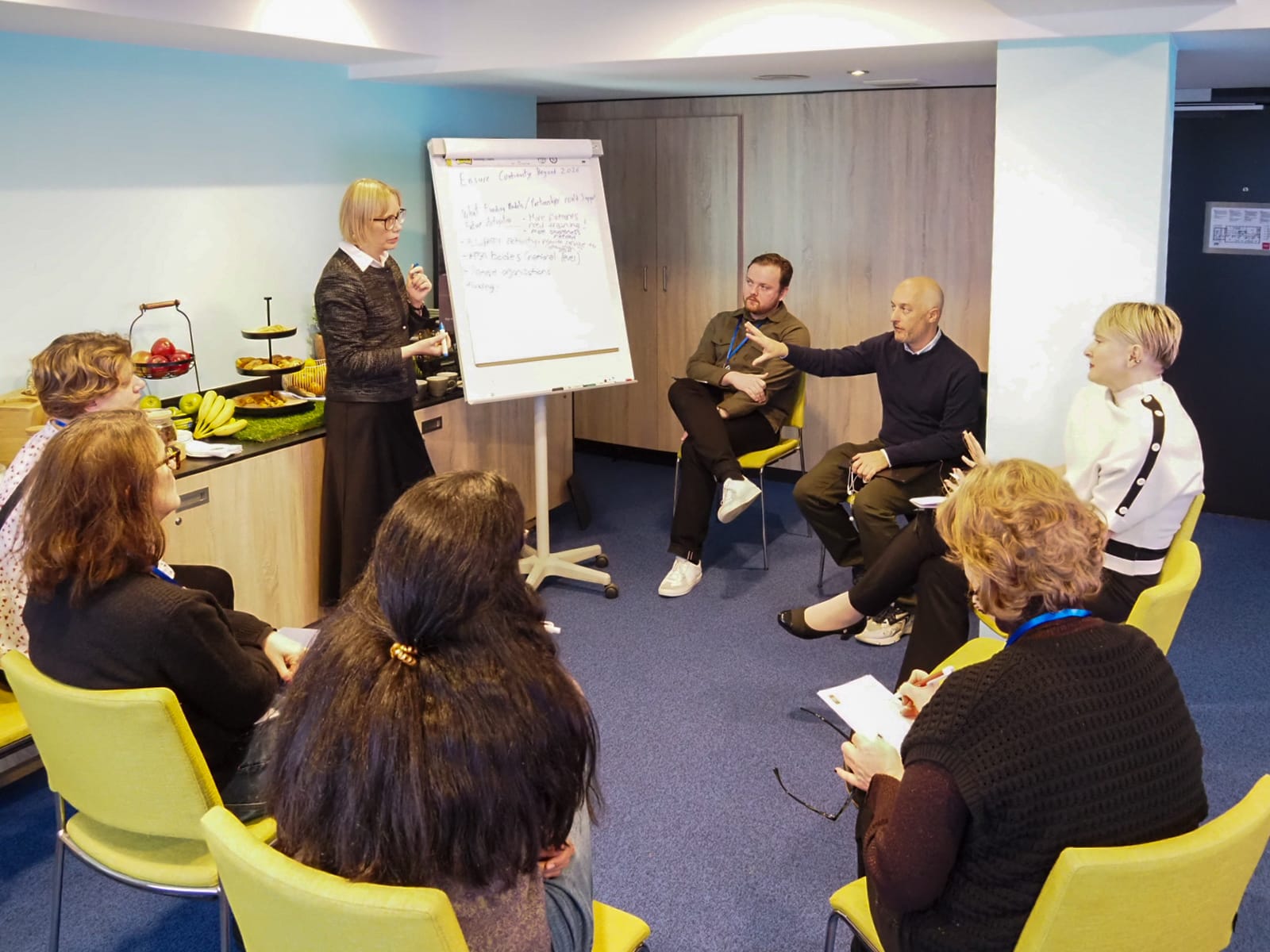
Figure 8: Excerpt from the first breakout group discussion on Partnerships and Impact
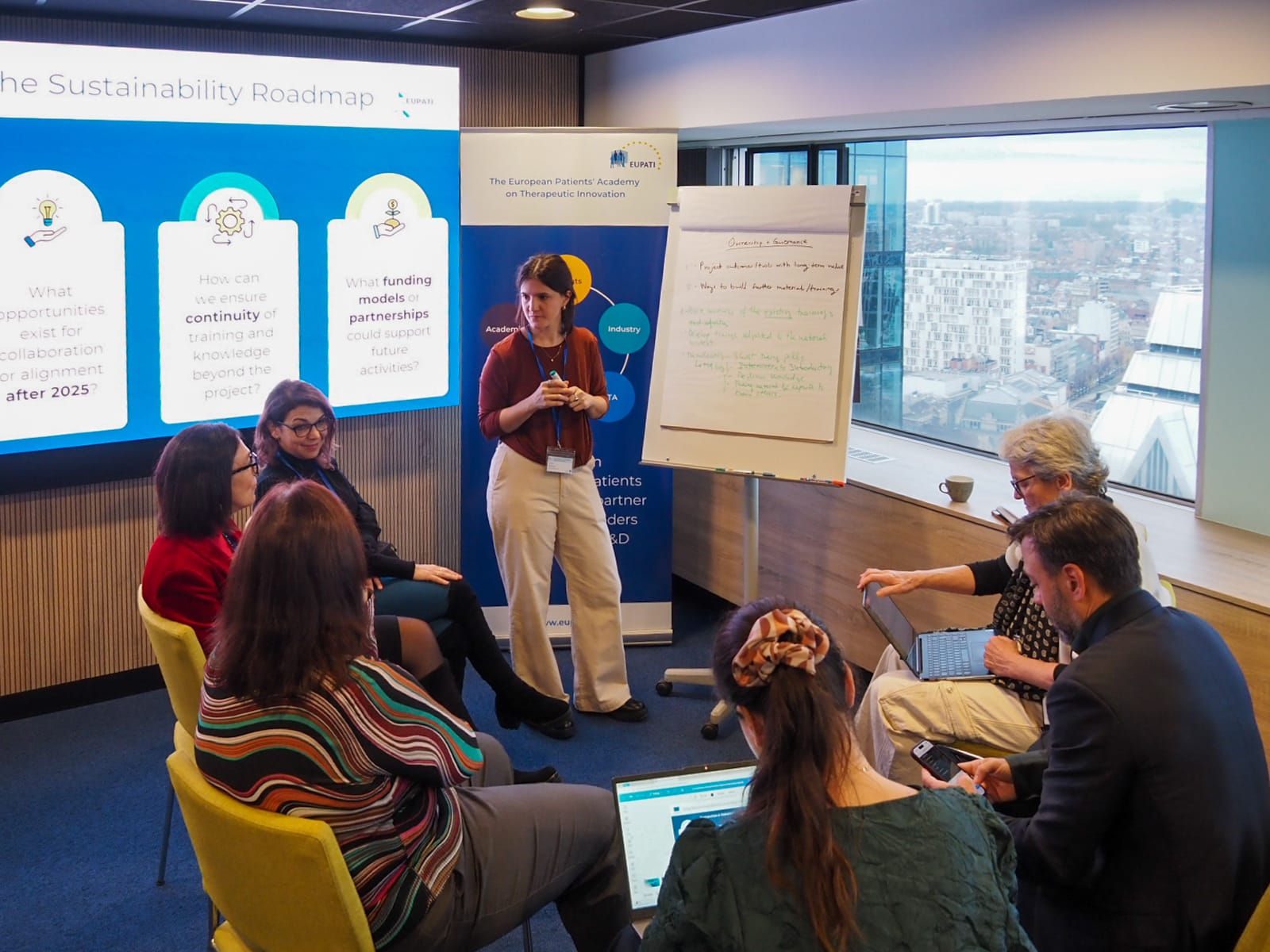
Figure 9: Excerpt from the first breakout group discussion on Ownership and Governance
Key reflections from both breakout group discussions included:
- The need for clear governance structures and defined ownership of training materials
- Expansion of microlearning and gamification approaches
- Differentiating training pathways for general patient audiences, organisational representatives and expert-level contributors
- Stronger partnerships with HTA bodies and EU-level initiatives
- Structured feedback mechanisms to measure impact, refine training materials and preparedness strategies
- Formalisation and sustained support of the HTA Ambassador network
- Diversified funding strategies beyond EU4Health
The overarching message was clear: sustainability must be system-based and institutionalised.
From Project to Practice: Closing with Shared Commitment
Across all sessions, one consistent theme emerged:
”Sustainable patient involvement in EU HTA depends not only on regulation – but on education, governance, partnership, innovation, and long-term commitment.”
As HTA4Patients concludes, the workshop marked not an end, but a transition from project delivery to structured sustainability planning. The next phase requires consolidation, institutionalisation, and strategic scaling ensuring that patient involvement remains not only embedded in law, but operational, meaningful, and enduring within European health technology assessment systems.
Date posted: February 22, 2026
Categories: EUPATI News