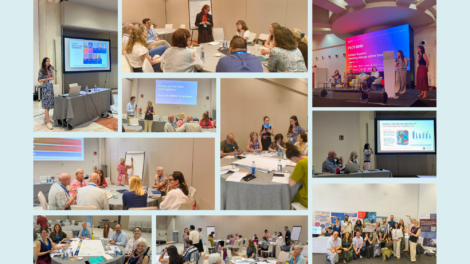
On November 10 2026, EUPATI moderated the first IHI-READI webinar for external audiences, the first in a long series of trainings and educational activities intended to build a more inclusive and representative clinical research ecosystem in Europe. This specific event tackled the topic of building trust with patients, especially the underserved and underrepresented populations, and how professionals such as HCPs, CROs, industry, clinical site teams and researchers all have a role to play to maintain trust throughout all phases of research.
Together with Ashish Rishi, Founder of Unwritten Health, Sarah Bernier, our EUPATI Project Coordinator for IHI-READI, the webinar delved into the importance of building trust with patients from the very start of clinical research priorities setting, until the very end of the process. This webinar also explored how the IHI-READI project is working towards embedding trust in its research through early engagement of the relevant stakeholders such as patients, patient organisations, clinical site teams etc.
This webinar set the precedent for the next 4 years of the project, where EUPATI and the other public and private partners of READI WP4 are working together to co-create educational activities that help build capacity and knowledge on the topics of inclusive research, and build bridges between patients and professionals within clinical trials.
To read the recap of this webinar or watch the full recording, visit the IHI-READI news section here: Six Moments That Can Make or Break Trust in Clinical Research.
🎯 Stay updated about EUPATI’s involvement in READI via our project page!
Disclaimer: This project is supported by the Innovative Health Initiative Joint Undertaking (IHI JU) under grant agreement No 101166227. The JU receives support from the European Union’s Horizon Europe research and innovation programme and COCIR, EFPIA, EuropaBio, MedTech Europe, Vaccines Europe, and Medicines and Healthcare Products Regulatory Agency and Breakthrough T1D. This project is also supported by UKRI (UK Research and Innovation) under grant agreement No 10152425 for National Institute for Health and Care Excellence and grant agreement No 31052024 for The University Court of the University of Aberdeen.
Date posted: November 12, 2026
Categories: Uncategorized